
Four Big Takeaways from the YouTube360 Event at Google
This past Tuesday, we had the honor of co-hosting an event with Google at their NYC headquarters that focused on how brands are increasingly taking a 360° approach to YouTube marketing by aligning their paid, organic, and creator strategies. I left the event more energized than ever about the future of YouTube, and wanted to share some of my biggest takeaways
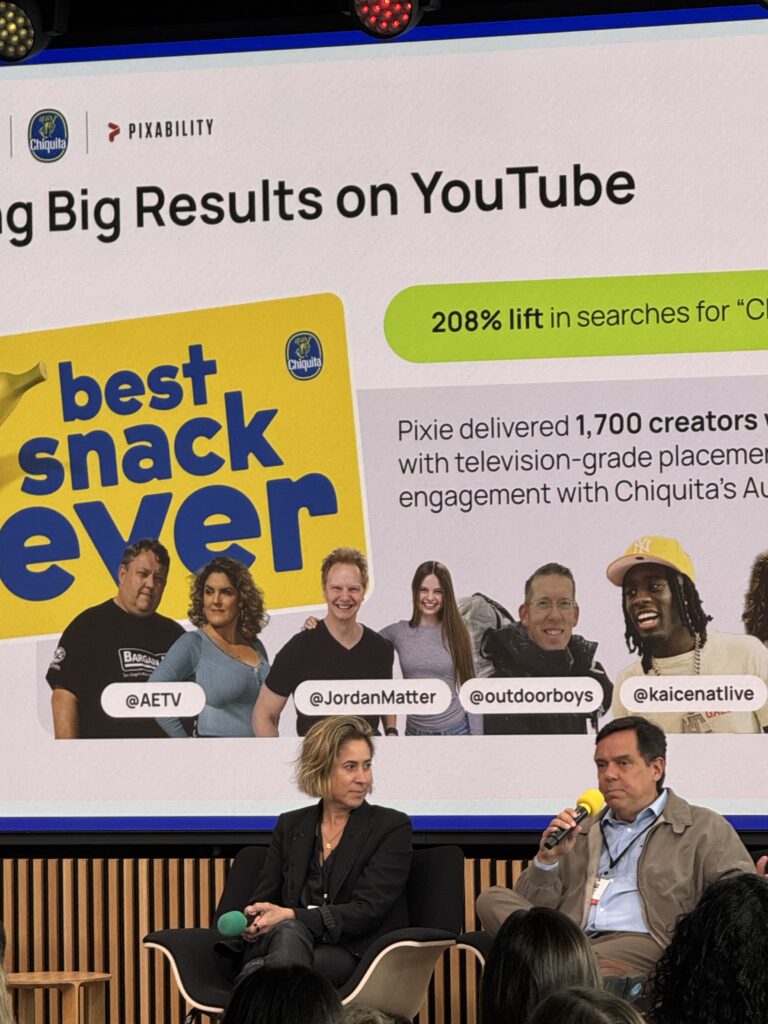
1. YouTube advertising has more opportunity than ever, but is also more complex than ever. In the first session of the day, there was a panel focused on YouTube advertising that included Andre Quadra, Head of Marketing USA, Chiquita, Tam Alessi, CEO, Mediaplus NA, Dave Kersey, VP, Global Head of Media, Shark Ninja, and our very own Global CRO, Leah Malone. In this session, and in conversations throughout the day, it was clear that brands and agencies resoundingly agreed that YouTube is no longer just a stand-alone video advertising platform, but an entire ecosystem. Because YouTube has had the highest watch time on TV screens for 3 years now according to Nielsen, (higher than Netflix, Disney, Prime, and all others), advertisers have to consider YouTube in their TV plans. Because YouTube Shorts alone now has higher reach than each of the other social platforms (Facebook, Instagram, TikTok etc), advertisers have to consider YouTube in their social plans. In addition, brands have to consider how their paid advertising ties into their organic efforts, and creator sponsorships – something many brands still aren’t doing. Dave Kersey and Andre Quadra both made these points in the session, sharing that they’re always thinking about how creators can be an important voice for their brand, and how to integrate these strategies into their YouTube ad campaigns. Tam Alessi talked about how, as a leading independent agency, Mediaplus is always thinking about a holistic vs. siloed approach to YouTube for their clients, and it has paid off in the results. It was incredible to see the success of some of these strategies in motion, including how Chiquita worked with Pixability and Mediaplus teams to drive 208% lift in searches for “Chiquita bananas” from their campaigns.
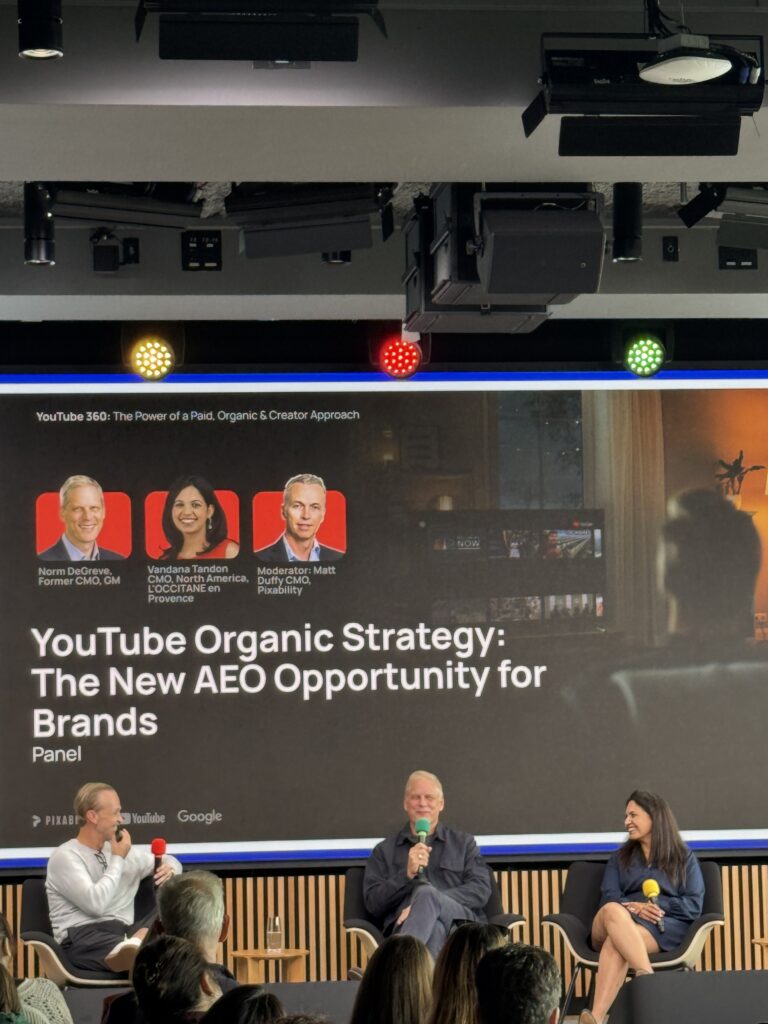
2. With the rise of AI search and AEO, brands have a new imperative to invest in their organic presence. In the second session of the day, I was honored to speak to Norm DeGreve, former CMO/Chief Growth Officer at GM and Vandana Tandon, CMO, North America at L’OCCITANE en Provence, about the organic challenge for brands. The big headline is that YouTube has now become the top destination for AI search, and brands are scrambling to figure out how to rebuild their YouTube channels to accommodate this shift. As Norm pointed out, brands understand this AI challenge but need help solving it. Part of this help comes from understanding that optimizing a channel for AI search is very different from optimizing it for traditional search. But Norm also pointed out that for brands struggling to figure it out, one solution is to work with a partner to find the right creators to “build the content for the brand,” so they can create a channel that drives engagement. AI search engines will recognize this engagement as a sign that the brand’s channel should be trusted and therefore, drive more traffic to it. Vandana also talked about how critical YouTube has become, and how her teams are building out new organic content strategies that includes increasing the network of creators they work with. Both agreed that finding a partner that can help with more of a 360 approach to YouTube is crucial.
3. Creators are at the center of all things YouTube. The third session of the day had an incredible panel of creator economy experts. The discussion was led by Jamie Gutfreund, Founder of Creator Vision and featured Sara Snyder, Global Head of Top Creators, YouTube, Courtney Hirsch, CEO, Jomboy Media and Zach Miller, President, JesserCo. Courtney and Zach discussed how Jomboy and JesserCo, each built around one wildly successful sports and entertainment creator, see YouTube as the key platform for that creator, and they’d love to see brands build 360 programs with paid, organic, and creator strategy centered on their creator. Courtney made the point that successful creator companies know that they must choose their brand partners wisely as they have a commitment to their community to be authentic – which also helps their brand partners in the end. Sara tied all of these conversations together, talking about the ways that Google helps brands connect with the right creators for both partnerships and advertising, and how Pixability can help bring the whole program together.
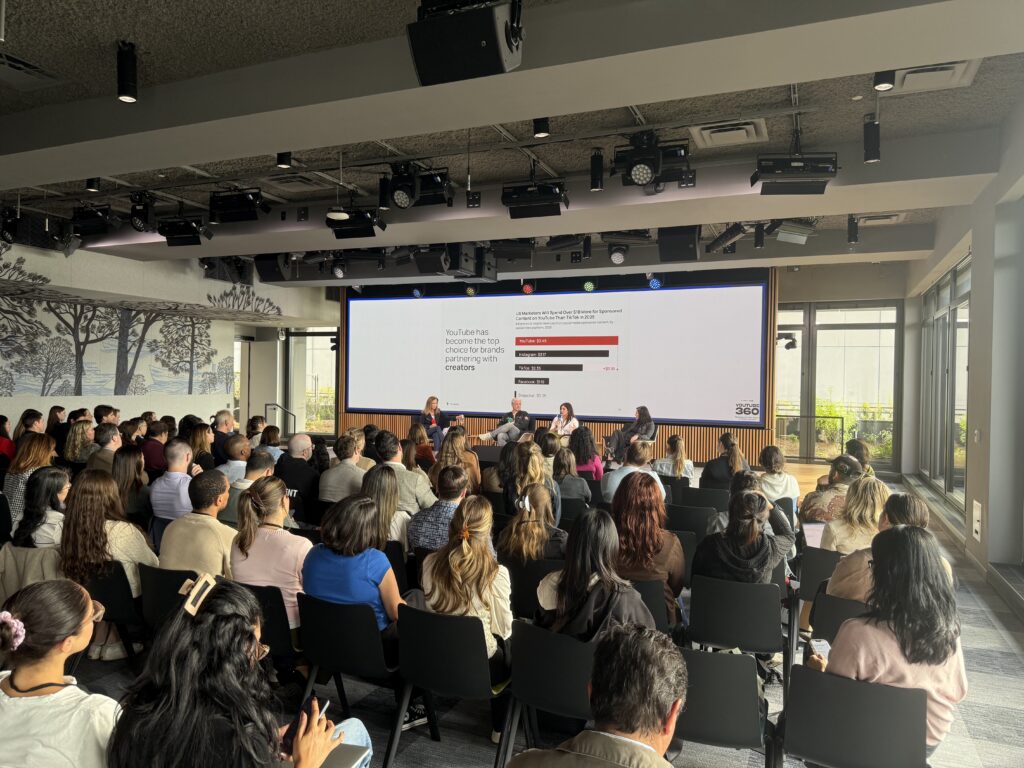
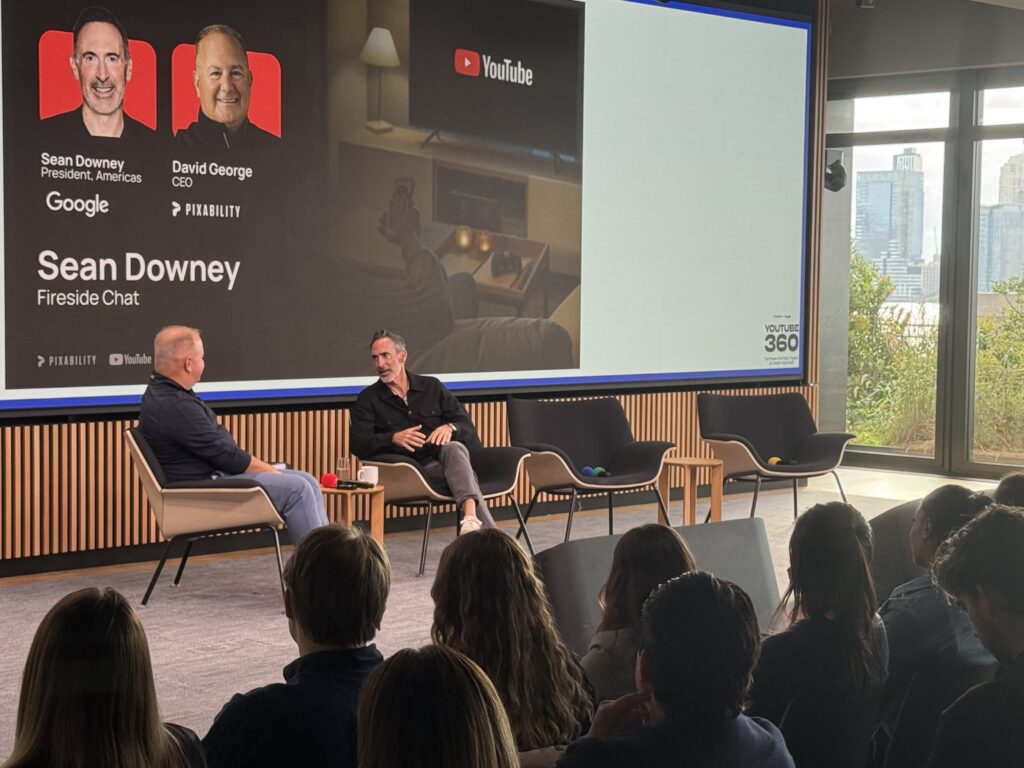
4. The big headline: Consumers engage on YouTube in three ways, and so brands need to follow their lead. Pixability’s CEO David George kicked off the day with an amazing quote from Charisse Hughes, former SVP/CMO of Kellanova that read : “Many brands are not showing up on YouTube in a positive way. Consumers don’t separate paid, organic and creator content when they make decisions. They encounter our brands as one impression of one company.” This set the tone that brands should be meeting consumers where they are by working with partners like Pixability who can help them create a campaign that is aligned across their advertising, organic and creator initiatives. David’s fireside chat with Sean Downey, President Americas at Google, to wrap up the event was a perfect bookend to this quote from Charisse at the beginning. I could have listened to Sean talk for hours about the way YouTube has changed in the decades he has been with the company. He talked about the early days when he was part of the teams figuring out how to add the initial ad formats to the platform. From that humble beginning, he told a fun story about how he was with a few YouTube creators recently when movie star Tom Holland came and introduced himself as a big fan of theirs, proving just how powerful creator influence has become. At the end of his session, when David asked him which types of brands are asking for help on a more holistic paid/organic/creator approach, Sean smiled and said “all of them.” He pointed out that this is THE way brands are thinking about the platform now since consumers hear not just the brand’s voice on YouTube, but the voices of creators and other consumers.
The overall message from the day was that there is no greater time for a brand to be engaging audiences on YouTube, but to do it properly, the approach needs to be holistic. I couldn’t be more excited as we enter this new and exciting age of YouTube marketing.